
Most founders of small service businesses treat marketing like a rescue mission. When the pipeline looks thin, there is a sudden burst of activity: three LinkedIn posts in a week, a frantic email to the newsletter list, and perhaps a half-finished update to the services page. Then, as soon as a new client signs, the marketing stops. The engine stalls. This "start-stop" cycle is the primary reason why many talented professionals struggle to grow: they are trapped in a reactive loop that creates feast or famine.
Building sustainable marketing operations is the only way to break this cycle. It is not about doing more marketing; it is about building a system that moves forward even when you are busy with client work. It is about shifting your perspective from "marketing as an event" to "marketing as an infrastructure." When your marketing has a steady rhythm, it builds compound value over time, ensuring your business remains visible and trusted without requiring your constant, high-energy intervention.
At InteniThrive Consulting, we believe that for a lean team, the most effective marketing is the kind that actually gets done. By focusing on practical improvements and consistent follow-through, you can turn your website and content into a reliable asset rather than a source of persistent guilt. This guide will walk you through the transition from reactive heroics to a calm, professional marketing engine that supports your long-term goals.
Key Takeaways
- Move Beyond the Start-Stop Cycle: Transition from reactive marketing "bursts" to a steady, weekly rhythm.
- Prioritize Infrastructure Over Campaigns: Build systems and processes that allow marketing tasks to move forward without founder intervention.
- Reduce the Coordination Burden: Simplify your tech stack and decision-making to lower the friction of execution.
- Focus on Content Utility: Refresh and reuse existing assets to maximize ROI rather than constantly chasing "new" ideas.
- Measure Practical Progress: Value visible movement and operational consistency over vanity performance metrics.
What are Sustainable Marketing Operations?
Sustainable marketing operations are the repeatable processes, tools, and rhythms that allow a business to maintain consistent marketing activity without exhausting its human or financial resources.
For a lean service business, "sustainable" means manageable. It means that your marketing work doesn't slip when you get a large project or when a key team member takes a week off. Unlike high-growth startups that burn through cash and people to find "growth hacks," sustainable operations focus on the long game. This involves setting up a Rhythm Marketing Engine where small, meaningful improvements happen every single week.
The goal is to move away from the "Hero Phase": where the founder must provide the spark for every single action: to the "Infrastructure Phase," where the system carries the weight. This infrastructure includes everything from how you capture leads to how you update your blog. When these operations are healthy, they provide a sense of calm. You know the work is moving, the search visibility is being supported, and the brand is being cared for, allowing you to focus on your zone of genius.
Why Lean Service Businesses Struggle with Marketing Consistency
Consistency stalls because founders often treat marketing as a series of creative projects rather than a fundamental business function requiring a dedicated operational rhythm.
Most service business owners are experts in their field, not professional marketers. Consequently, they view marketing as a creative burden that requires a "spark" of inspiration. When that inspiration doesn't strike, or when the pressure of client delivery takes over, marketing is the first thing to be sidelined. This creates a coordination burden that eventually leads to friction. According to a report by the Content Marketing Institute, one of the top challenges for small teams is the lack of a documented process, which leads to inconsistent output.
Another major hurdle is the "Novelty Trap." We are often told that we need to be on every new platform or using the latest AI-driven strategy. This creates a distraction from the fundamental work that actually drives results for service businesses: showing up reliably in search, demonstrating expertise through useful content, and maintaining buyer trust. When you constantly shift strategies, you never build the momentum required for those strategies to pay off.
The Three Pillars of a Marketing Rhythm
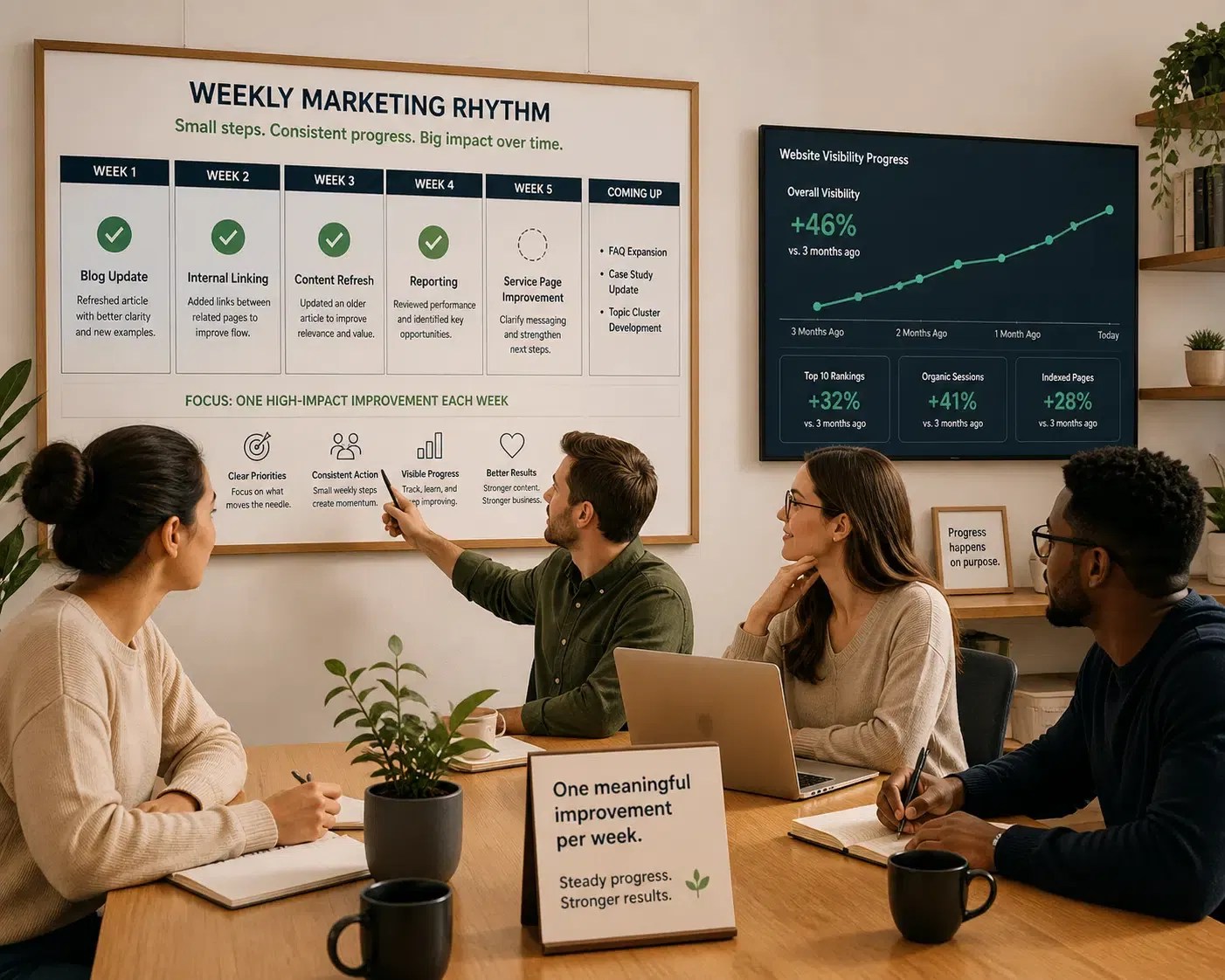
A successful marketing rhythm is built on three essential pillars: a consistent schedule, a defined scope of work, and clear ownership of tasks.
1. Consistent Schedule (The Heartbeat)
A rhythm requires a predictable cadence. Whether it is a weekly content refresh or a monthly reporting session, these dates should be non-negotiable on your calendar. At InteniThrive, we advocate for the "Weekly Marketing Movement" approach. By making one or two small improvements every week: like fixing a broken link or updating a call-to-action: you achieve more in a year than most businesses achieve with three massive, expensive rebrands.
2. Defined Scope (The Boundaries)
One of the biggest causes of marketing friction is an undefined scope. If your goal is "get more leads," you will likely feel overwhelmed. If your goal is "update the internal linking on these three service pages," the task becomes manageable. Defining exactly what "marketing work" looks like each week prevents the scope creep that leads to burnout. This is why our Baseline Setup at $599 focuses on identifying these specific gaps first.
3. Clear Ownership (The Driver)
Nothing moves without an owner. For most lean businesses, the founder is the owner by default, which is the root of the problem. Sustainable operations require a partner or a system that takes the coordination burden off the founder's plate. When someone else is responsible for keeping the essential work moving, the founder can act as the strategist rather than the technician.
Reducing the Coordination Burden for Founders
Reducing the coordination burden involves simplifying decision-making and delegating the execution of routine marketing tasks to a trusted partner or system.
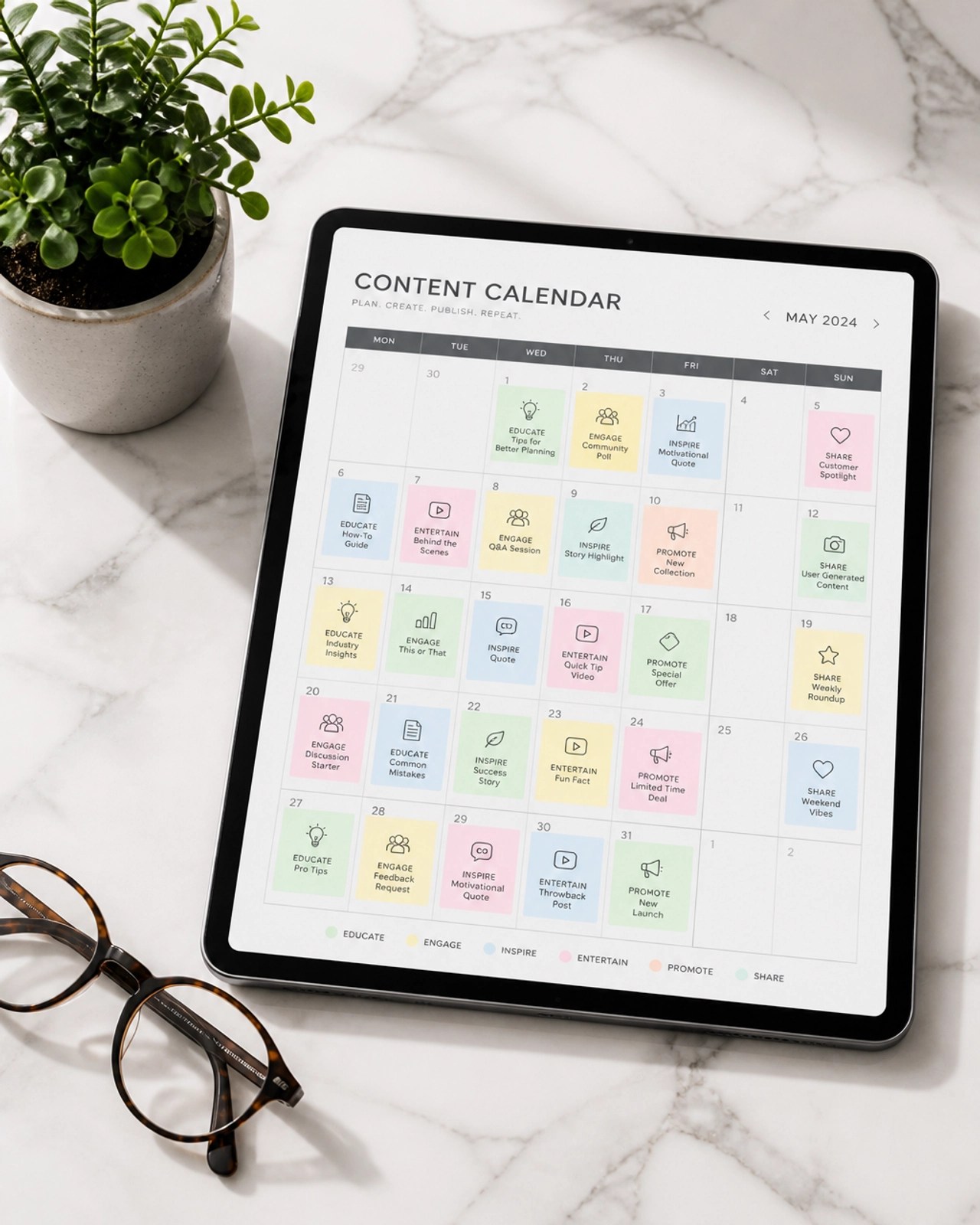
The "coordination burden" is the mental energy required to decide what to do, how to do it, and who should do it. For a founder, this is often more exhausting than the work itself. To make your marketing sustainable, you must strip away the noise. You don't need a 50-page strategy document; you need a structured content distribution plan that tells you exactly where a piece of content goes once it's written.
Specific Situational Moment: A solo consultant we worked with spent four hours every Sunday agonizing over what to post on LinkedIn. By establishing a "rhythm" where we repurposed her existing high-performing blog posts into a month's worth of updates, we reduced her decision-making time to zero, freeing her weekends for rest.
By standardizing your workflows, you turn "deciding" into "doing." This transition is vital for scaling. As noted in the Harvard Business Review, operational excellence isn't just about efficiency; it's about creating a system where every employee (or partner) can see the flow of value and fix that flow when it breaks.
Building Your Marketing Infrastructure
Marketing infrastructure consists of the website, content library, and technical setup that work together to attract, engage, and convert clients automatically.
Your website is the foundation of your infrastructure. However, a website is not a "set it and forget it" asset. It requires ongoing search visibility support and content refreshes to remain relevant. Sustainable operations focus on making your website work harder so you don't have to. This includes:
- Content Refreshing: Instead of writing new articles, spend time updating your top-performing ones with new data or better internal links.
- Internal Linking: Ensure that your "Service Pages" are easily reachable from your blog posts to guide the buyer's journey.
- Simple Reporting: Use a clean dashboard that tracks progress without overwhelming you with data you don't need.
The InteniThrive Rhythm Marketing Engine is designed exactly for this. At $599/month, we provide the steady, dependable execution that keeps this infrastructure in top shape. We focus on the "unsexy" but essential work: the internal linking, the content reuse, and the search visibility: that actually moves the needle for service-based businesses.
Measuring Progress: The InteniThrive Approach
Effective marketing measurement focuses on operational consistency and visible website improvements rather than fluctuating lead volumes or social media vanity metrics.
In a sustainable model, "progress" is defined by the health of the system. Are your core pages being updated? Is your internal linking improving? Is your content being repurposed across channels? While leads are the ultimate goal, they are often a lagging indicator. If you only measure leads, you will be tempted to quit during the quiet periods.
Instead, track your "Weekly Marketing Movement." Did we make an improvement this week? Yes. Did we support our search visibility? Yes. This shift in focus reduces performance anxiety and creates a sense of accomplishment. When the infrastructure is consistently improving, the leads eventually follow as a natural byproduct of a well-oiled machine.

The "Refinement Over Replacement" Philosophy
There is a common misconception that to grow, you must always be producing something new. New blog posts, new social media campaigns, new lead magnets. This is the fastest route to burnout.
The contrarian take we hold at InteniThrive is that for most established service businesses, the most valuable "new" content is actually your "old" content, bettered. Your archives are likely full of useful ideas that have been buried by time. By practicing content refresh and reuse, you can extract 10x more value from a single asset. A well-written pillar post from three years ago can be updated for the current market, broken into a dozen social posts, and turned into a client-facing PDF. This is the ultimate form of sustainable marketing: doing more with what you already have.
Conclusion: Starting Your Sustainable Journey
The transition to sustainable marketing operations doesn't happen overnight, but it does start with a single decision: to stop the heroics and start the rhythm. By focusing on infrastructure, reducing coordination friction, and committing to weekly progress, you build a business that can grow without demanding your every waking hour.
If you are ready to stop the start-stop cycle, consider our Baseline Setup ($599). We help identify the gaps in your current setup and establish a practical path forward. From there, our Rhythm Marketing Engine ($599/month) provides the steady, reliable support needed to keep your marketing moving consistently, month after month.

Frequently Asked Questions
What are the benefits of sustainable marketing?
Sustainable marketing ensures long-term growth by creating a repeatable system that doesn't rely on constant founder intervention. It reduces burnout, lowers long-term costs, and builds a more valuable business asset.
How do I know if my marketing operations are unsustainable?
If you only market your business when you need clients, or if your blog hasn't been updated in six months because you're "too busy," your operations are likely unsustainable and reactive.
What is a Rhythm Marketing Engine?
It is a managed service provided by InteniThrive Consulting that focuses on making steady, weekly improvements to your website and content to ensure consistent search visibility and buyer trust.
Do I need a large team for sustainable marketing?
No. Sustainable marketing is actually designed for lean teams. It focuses on simplifying processes and using external partners to handle execution, so the founder doesn't have to hire a full-time marketing department.
Keywords: sustainable marketing operations, marketing consistency, marketing infrastructure, lean business marketing, content marketing rhythm, coordination burden

Leave a Reply