For many small service businesses, local search feels harder than it needs to be.
You know nearby buyers are searching. You know your website, Google Business Profile, reviews, and listings matter. But the language around local SEO can make simple tasks feel like technical projects.
The good news: local search visibility rarely improves with a single dramatic overhaul. It improves through steady maintenance.
Google says local results are shaped mainly by relevance, distance, and prominence. You cannot control where a searcher stands, but you can control whether your business information is accurate, your services are clear, your reviews are active, and your website is easy to understand. (Google Help)
That is where search visibility support becomes practical.
This five-minute weekly routine helps small service businesses keep local search support moving without turning marketing into another full-time job.
Key Takeaways
- Google Business Profile activity: Keep your profile accurate, up to date, and useful.
- Review responses: Respond with service and location context when natural.
- Internal links: Help visitors and Google find your most useful pages.
- NAP consistency: Keep your business name, address, and phone number consistent.
- Weekly rhythm: Marketing consistency for service businesses comes from repeatable action, not occasional cleanup sprints.
Table of Contents
1. Refresh Your Google Business Profile
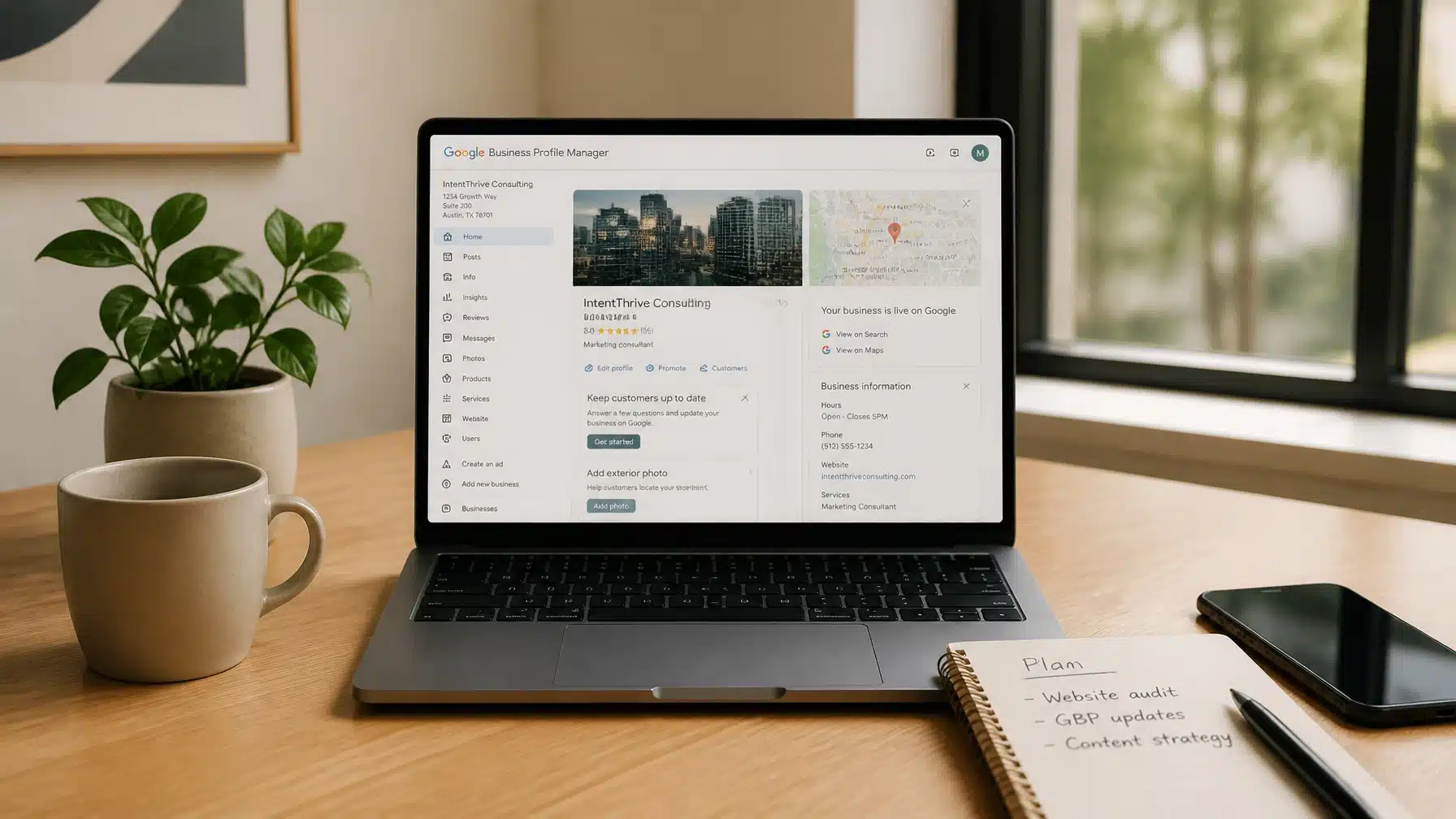
Your Google Business Profile is often your second homepage.
Many local buyers make decisions before they reach your website. Google’s local search research found that 76% of people who search on a smartphone for something nearby visit a related business within a day, and 28% of those searches result in a purchase. (Google Business)
That makes your profile more than a listing. It is a trust signal.
Spend one minute each week making one useful update. This does not need to be polished or promotional. It needs to be accurate and up to date.
Useful weekly actions include:
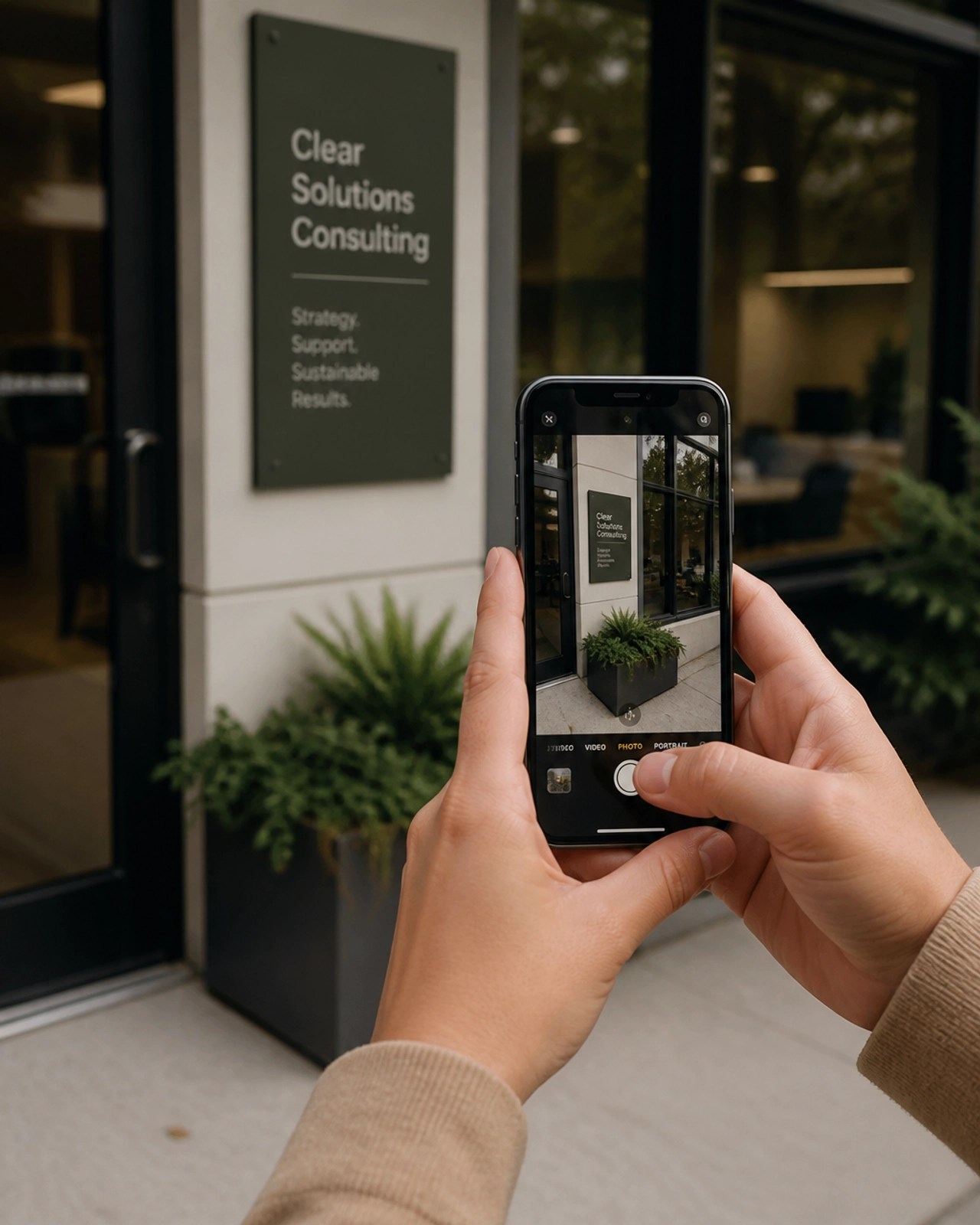
- Add one recent photo: Use a real project, workspace, storefront, vehicle, team, or service image.
- Confirm business hours: Check holidays, seasonal changes, and special closures.
- Review services: Make sure your listed services still match what you offer.
- Update service areas: Confirm the cities, neighborhoods, or regions you serve.
- Publish one Google Post: Share a short tip, update, project note, or seasonal reminder.
A profile update improves the underlying accuracy of your listing. A Google Post adds timely context. Both can help, but accuracy comes first.
This is basic website maintenance for small business visibility. Your business should look active, reliable, and easy to contact before someone decides whether to call.
2. Respond To Reviews With Intention
Reviews support trust before a sales conversation begins.
BrightLocal’s Local Consumer Review Survey tracks how consumers use reviews when choosing local businesses. Its 2026 research continues to show that reviews affect local buying behavior, not just online reputation. (BrightLocal)
Do not respond with just “Thanks for the review”; add a little more context to help.
A stronger response might say:
“Thanks, Sarah. We’re glad the emergency plumbing repair in downtown Chicago went smoothly.”
That response does three useful things:
- Thank the customer: It shows appreciation.
- Name the service: It gives buyers and search engines more context.
- Mentions the location: It reinforces local relevance when appropriate.
Keep it natural. Do not stuff keywords into every reply. The goal is clarity, not awkward repetition.
If no new reviews came in this week, use the minute another way:
- Send one review request to a recent happy customer.
- Respond to one older unanswered review.
- Save a reusable review request template.
- Add review requests to your normal project closeout process.
Review consistency matters because stale profiles create doubt. A business with recent, thoughtful responses often feels more active than one with many old reviews and no visible owner participation.
This is local search support at its most practical: show buyers that the business is alive, responsive, and paying attention.
3. Add One Internal Link
Internal links help people and search engines understand your website.
Google Search Central says Google uses links to discover pages and understand relevance. Clear anchor text also helps people, and Google make sense of where a link goes. (Google for Developers)
That means one small internal link can reduce friction.
Open one existing page each week. Find a natural mention of a service, location, or topic. Link it to the most relevant page.
For example:
- Link “website maintenance for small business” to your website maintenance page.
- Link “local search support” to your local SEO or visibility page.
- Link “tax planning for contractors” to the service page for that offer.
- Link “emergency plumbing repair” to the relevant service page.
Avoid vague anchor text like “click here.” Use words that explain the destination.
A simple internal linking checklist:
- Open one page: Start with a blog post, FAQ, service page, or about page.
- Find one useful phrase: Choose a service, location, problem, or buyer question.
- Link to the best next page: Make the path obvious.
- Read the sentence aloud to ensure the link feels natural.
Internal linking is one of the easiest ways to improve marketing consistency for service businesses. You are not creating something from scratch. You are making existing content easier to use.

4. Check NAP Consistency
NAP stands for name, address, and phone number.
For local search, this information should be consistent across the web. Search engines compare business data across multiple sources to determine whether a business is real, up to date, and trustworthy.
Start with the most important listings:
- Google Business Profile
- Bing Places
- Apple Business Connect or Apple Maps
- Facebook Page
Check the basics:
- Business name
- Street address
- Suite or unit number
- Phone number
- Website URL
- Business hours
Small differences can create confusion. One listing may show “Suite 100,” another may show “Ste. 100,” and another may use an old phone number. A person can usually understand the difference. Search systems may not handle it as cleanly.
NAP consistency also protects the customer experience. Wrong hours, outdated phone numbers, and old addresses do not just affect rankings; they also affect customer experience. They cost calls, appointments, and trust.
This is not exciting work. That is partly why it matters.
Good search visibility support often looks like quiet maintenance. You catch small problems before they become cleanup projects.
5. Protect Next Week’s Rhythm
The final minute is about keeping the routine alive.
Most small service businesses do not struggle because they lack marketing ideas. They struggle because useful work becomes stop-start.
One month brings a burst of updates. Then the client’s work gets busy. Reviews go unanswered. Listings go stale. Internal links remain weak. Website maintenance gets pushed back until something feels urgent.
That pattern creates a hidden cost.
A weekly rhythm prevents the work from becoming heavy. It also supports the signals Google says matter for local results: relevance, distance, and prominence. You cannot control distance, but you can improve relevance and prominence by providing clearer information, useful content, active reviews, and a consistent local presence. (Google Help)
Use the final minute to ask:
- What moved this week?
- What slipped?
- What should be repeated next week?
- What is the next small improvement?
- Who owns it?
Then put the next five-minute session on the calendar.
The goal is not intensity. The goal is rhythm.
The Stop-Start Tax
Inconsistent marketing creates a cost that often stays hidden until lead flow slows.
We call it the stop-start tax.
Every time marketing pauses, a few things happen:
- Listings become outdated.
- Reviews go unanswered.
- Website issues remain unresolved.
- Useful content becomes harder to find.
- Restarting takes more effort than maintaining.
That restart effort is the tax.
For small service businesses, this is often the real problem. Not lack of effort. Not a lack of ideas. The problem is inconsistent follow-through.
A stop-start pattern may look like this:
- January: a burst of website updates
- February: no review responses
- March: no content updates
- April: a rushed listing cleanup
- May: local search visibility feels unclear again
That cycle makes marketing feel heavier than it should.
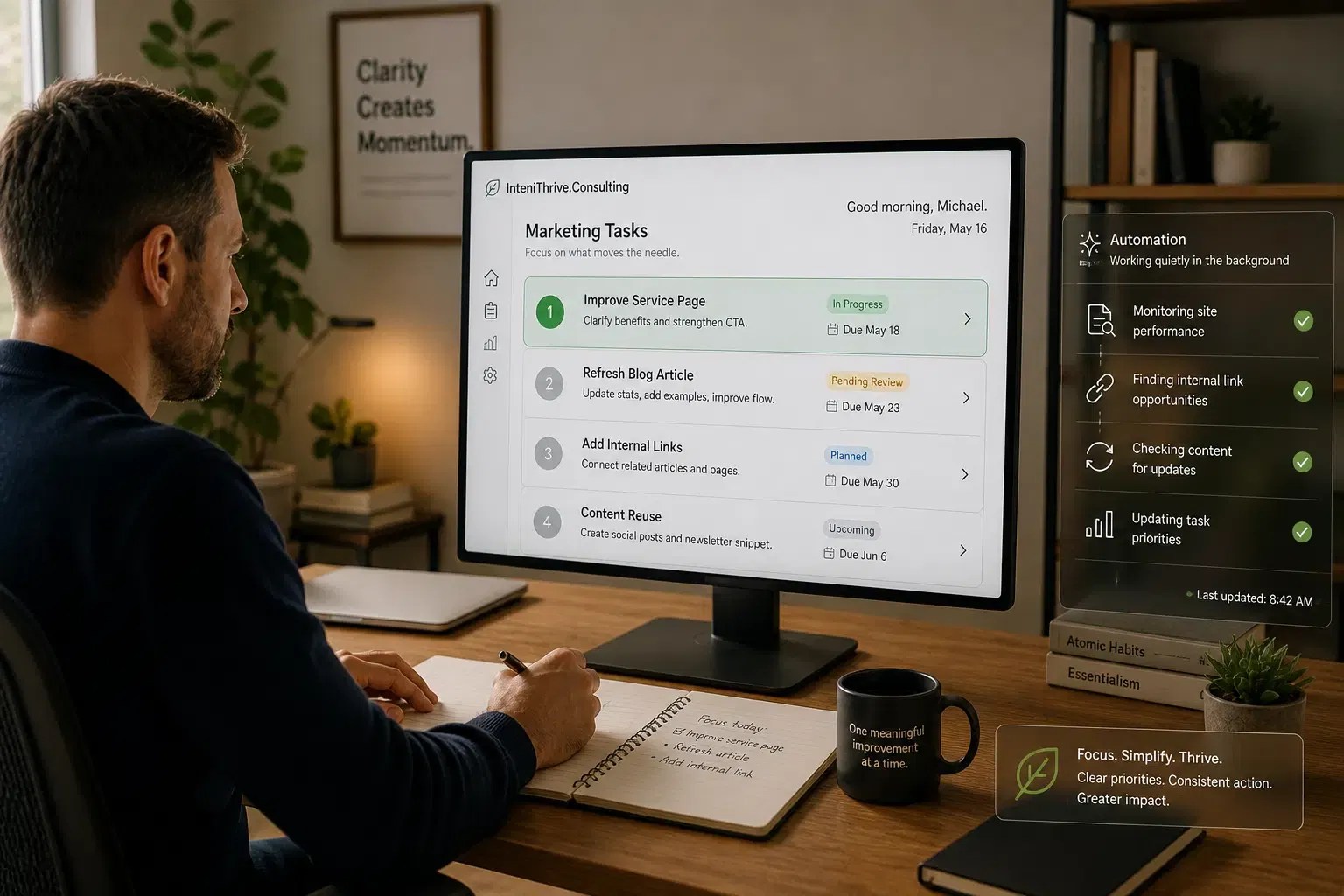
Marketing consistency for service businesses should reduce recurring friction. A weekly routine does that by keeping the system warm. The business stays easier to find, easier to trust, and easier to maintain.
The Compounding Value Of Local Search Support
Small local SEO tasks rarely feel dramatic.
One photo. One review response. One internal link. One listing correction. One calendar reminder.
That is why they are easy to ignore.
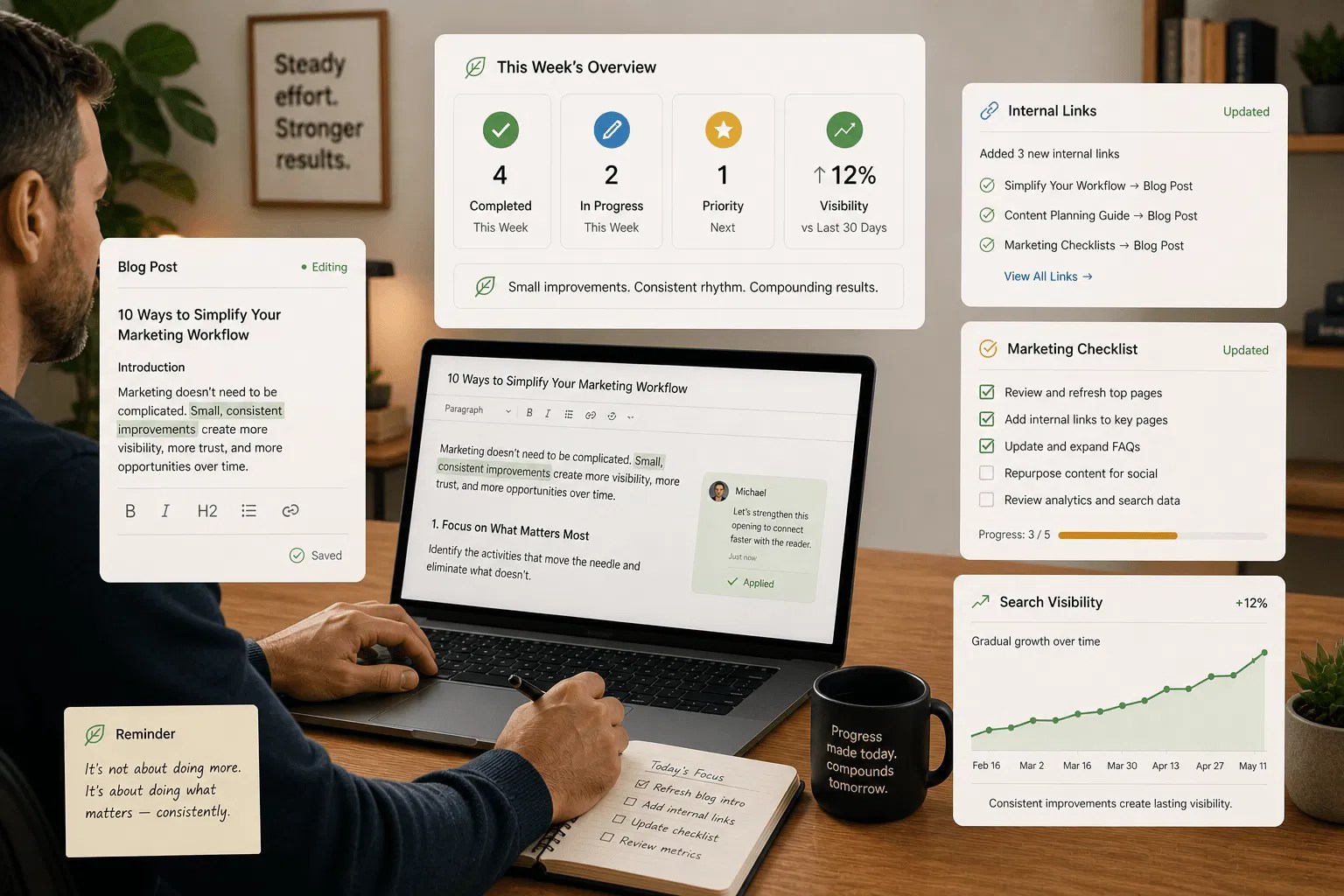
But small actions compound when they repeat. A profile that is updated weekly looks more current. Reviews that receive thoughtful responses build trust. A website with stronger internal links is easier to crawl and use. Listings with consistent data reduce confusion.
Over six months, the difference becomes visible.
A practical compounding pattern might look like this:
- Week 1: Add one recent Google Business Profile photo.
- Week 3: Respond to three reviews with service context.
- Week 5: Add two internal links to priority service pages.
- Week 8: Fix one outdated phone number.
- Week 12: Add FAQs to a service page.
- Month 6: Your local presence looks clearer, more current, and more trustworthy.
This is not a campaign. It is maintenance.
That matters because website maintenance for small business visibility should not depend on panic. It should depend on a clear rhythm that is simple enough to repeat.
Why Consistency Beats Intensity
A sprint can help during a launch, redesign, or cleanup. But local search usually responds better to durable signals than occasional bursts.
Google’s local ranking guidance focuses on relevance, distance, and prominence. A business supports those signals by keeping information accurate, services clear, reviews active, and website content connected. (Google Help)
The five-minute routine works because it is sustainable.
It helps you:
- Keep your Google Business Profile current.
- Maintain review activity.
- Strengthen internal links.
- Protect business data accuracy.
- Keep next steps visible.
At InteniThrive Consulting, this is the same operating idea behind Rhythm Marketing Engine: one useful website, piece of content, improvement in visibility, or distribution each week.
The point is not more marketing noise.
The point is steady, useful movement.
What To Do If You Have 15 Minutes
Some weeks allow more room. Use that time without turning the routine into a sprint.
Minutes 1-5: Complete The Core Routine
Start with the original five actions:
- Refresh your Google Business Profile.
- Respond to reviews.
- Add one internal link.
- Check NAP consistency.
- Protect next week’s rhythm.
Minutes 6-10: Improve One Supporting Asset
Choose one small improvement:
- Add one FAQ to a service page.
- Upload two more project photos.
- Expand a thin service description.
- Fix one broken link.
- Update business hours on another directory.
This is where website maintenance for small business owners becomes easier. You are not rebuilding the site. You are reducing friction one useful fix at a time.
Minutes 11-15: Make Next Week Easier
Use the final minutes to improve follow-through:
- Save a review request template.
- Bookmark your main local listings.
- Note two internal linking opportunities.
- List one page that needs a future refresh.
- Assign ownership if more than one person is involved.
Do not overbuild the system. Make it easier to repeat.
Practical Steps To Get Started
- Pick a recurring time: Choose a weekly moment you can realistically protect.
- Save your links: Bookmark your Google Business Profile, website login, and key listings.
- Use a simple checklist: Keep the five steps visible.
- Start small: A good-enough update today beats a perfect update that never happens.
- Track what changed: Note each improvement so progress stays visible.
Local search is not a race. It is a maintenance rhythm.
Five minutes a week can help your business stay visible, accurate, and easier to trust. Over time, that rhythm supports search visibility, local search, website maintenance for small businesses, and better marketing consistency for service businesses.
FAQ
How long does local SEO take?
Local SEO is gradual. Some updates, such as business hours, can appear quickly. Ranking, traffic, and lead improvements often need several months of consistent activity.
What is search visibility support?
Search visibility support is the recurring work that helps your business be easier to find and understand online. It may include profile updates, review responses, internal links, content refreshes, FAQ improvements, and listing maintenance.
What is local search support?
Local search support focuses on helping nearby buyers find accurate, useful information about your business. It often includes Google Business Profile updates, reviews, local listings, service-area clarity, and location-aware website improvements.
What is the difference between a Google Business Profile update and a Google Post?
A profile update changes business information, such as hours, services, photos, or service areas. A Google Post is a short update that appears on your profile. Both can help, but accurate profile information matters first.
What should I do if I don’t get any new reviews this week?
Send one review request, respond to an older unanswered review, or improve your review request process. The goal is to keep the system moving, not force a review every week.
Why do internal links matter for local SEO?
Internal links help Google discover pages and understand how your content connects. They also help visitors find the next useful page without having to search your menu.
Which platforms matter most for NAP consistency?
Start with Google Business Profile, Bing Places, Apple Business Connect, Apple Maps, and Facebook. Then check industry directories, local chamber listings, Yelp, and other relevant platforms.
Do tiny NAP differences really matter?
Yes. Small inconsistencies can make it harder for platforms to match your business identity across the web. They can also confuse customers.
Do I need a physical office to rank in local search?
Not always. Service-area businesses can use Google Business Profile without displaying a public address, as long as they follow Google’s eligibility and profile rules.
How does this connect to Rhythm Marketing Engine?
It reflects the same idea: steady weekly execution beats stop-start bursts. Rhythm Marketing Engine keeps one useful website, content, visibility, or distribution improvement moving each week.
Leave a Reply